🤖 AI Expert Verdict
Monocrystalline silicon (mono-Si) is a critical material used in high-efficiency solar panels and modern electronics. Manufacturers produce mono-Si using the Czochralski method, which creates a continuous, unbroken crystal lattice without grain boundaries. This perfection gives mono-Si solar cells the highest confirmed conversion efficiency among commercial PV technologies.
- Highest confirmed efficiency (up to 26.7%).
- Lack of grain boundaries improves charge flow.
- Offers better performance in limited space applications.
What is Monocrystalline Silicon?
Monocrystalline silicon (mono-Si) is a vital material. We also call it single-crystal silicon. It forms the base for modern electronics. You find it in computers and smartphones. Mono-Si is also crucial for solar cells. It helps create highly efficient renewable energy devices. The crystal lattice in mono-Si is continuous. It has no broken edges or grain boundaries. This forms a single crystal structure.
The Importance of Mono-Si
Mono-Si is perhaps the most important material of the “silicon era.” Its semiconducting properties drive the IT revolution. It is available at an affordable cost today. This availability made the development of modern electronics possible. Mono-Si is different from other silicon forms. Polycrystalline silicon uses many small crystals. Amorphous silicon is non-crystalline. Mono-Si offers superior electronic properties due to its single, perfect crystal structure.
How We Produce Monocrystalline Silicon
Production starts with high-purity silicon. This silicon is semiconductor-grade. We melt the pure silicon. Then we use a seed crystal to start the growth. The process happens in an inert atmosphere, like argon. The most common method is the Czochralski method. A rod-mounted seed crystal dips into the molten silicon. Workers pull the rod up slowly while rotating it. This action allows the material to solidify. It forms a large cylindrical ingot. These ingots can be very heavy and long. Magnetic fields help improve uniformity.
Wafering and Cost
We slice the solidified ingots into thin wafers. This slicing process is called wafering. Monocrystalline production is slow and costly. It is more expensive than casting polycrystalline ingots. However, the demand for mono-Si keeps rising. The lack of grain boundaries allows better charge carrier flow. This means improved performance for both integrated circuits and solar panels. If you want to invest in high-efficiency solar, you can Shop Our Products today.
Monocrystalline Silicon in Solar Cells
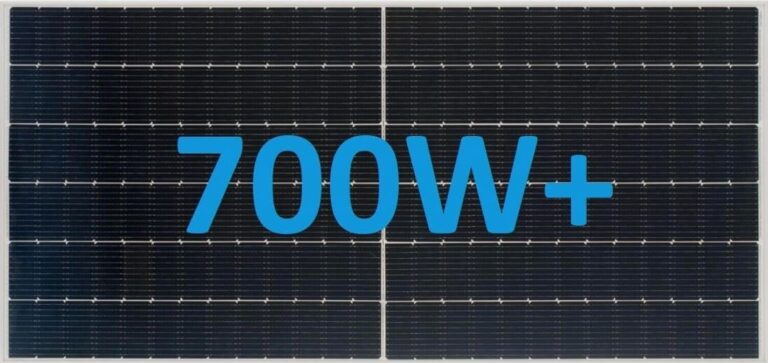
Mono-Si creates high-performance photovoltaic (PV) devices. Solar cells often use a slightly lower quality silicon. They call this solar-grade silicon (Sog-Si). Mono-Si holds the highest confirmed efficiency among commercial PV technologies. Its lab efficiency reaches 26.7%. Polycrystalline panels achieve lower efficiency. Mono-Si cells absorb photons better because of their black color. This contrasts with the blue color of poly-silicon. Since mono-Si is more expensive, we use it where space is limited.
Manufacturing Challenges and Future
The current manufacturing process wastes material. We cut the circular wafers into octagonal shapes. This lets us pack cells tightly into a panel. The leftover material must be recycled or discarded. Traditional wafer thickness is about 200 μm. New technology expects to reduce this to 140 μm by 2026. Researchers explore new methods. Direct wafer epitaxial growth involves growing layers on reusable substrates. These changes will cut waste and lower costs.
Comparison to Other PV Materials
Mono-Si stands apart from its rivals:
- Polycrystalline silicon: This material is cheaper to make. However, it is less efficient. Grain boundaries hinder electrical flow and performance.
- Amorphous silicon: This silicon is non-crystalline. It is flexible and lightweight. Its efficiency is much lower than mono-Si. We use it for niche applications needing flexibility.
Keep reading about solar technologies and sustainability. Read Our Blog for the latest updates.
Reference: Inspired by content from https://en.wikipedia.org/wiki/Monocrystalline_silicon.