🤖 AI Expert Verdict
Battery Energy Storage Systems (BESS) are essential grid infrastructure using aggregated batteries to store electrical energy. They are the fastest dispatchable power source, transitioning from standby to full power in under a second to stabilize grids, manage short-term peak demand, and provide ancillary services like frequency control. Costs are rapidly falling, making BESS an increasingly competitive alternative to traditional power sources.
- Fastest responding dispatchable source (under one second activation).
- Rapidly falling Levelized Cost of Storage (LCOS).
- Compact design allows for rapid installation in urban areas or close to customer load.
- Effective for peak shaving, frequency control, and providing operating reserves.
- High deployment flexibility allows for greater grid redundancy.
The Power Revolution: Understanding Battery Energy Storage Systems (BESS)
A stable, reliable electric grid is essential for modern life, and increasingly, that stability relies on Battery Energy Storage Systems (BESS). Also known as battery storage power stations or battery grid storage (BEGS), a BESS uses a large collection of batteries connected to the grid to store electrical energy. This technology isn’t just supplementary; it is rapidly becoming the backbone of grid resilience.
The Speed and Stability BESS Delivers
BESS stands out because it is the fastest responding dispatchable source of power currently available on electric grids. In the event of a grid contingency or sudden drop in supply, BESS can transition from standby to full power in less than a second. This rapid response capability is crucial for grid stabilization, minimizing the chance of disruptive power outages.
These systems are typically designed to provide their full rated power for durations ranging from 1 to 4 hours, though advancements are pushing for longer capacity. BESS is widely used for several critical functions:
- Short-Term Peak Power: Meeting sudden spikes in customer demand.
- Ancillary Services: Providing vital operating reserve and precise frequency control to maintain grid health.
- Transmission Strengthening: Allowing long power lines to operate closer to capacity by handling local differences between supply and demand.
Deployment and Economics: Smaller, Cheaper, Faster
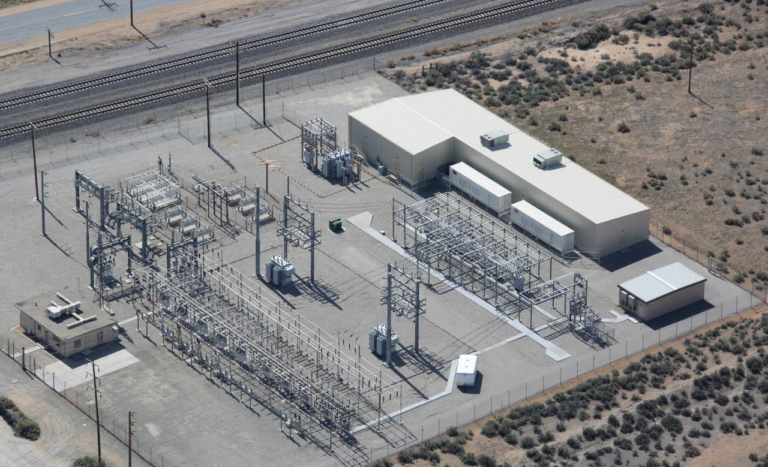
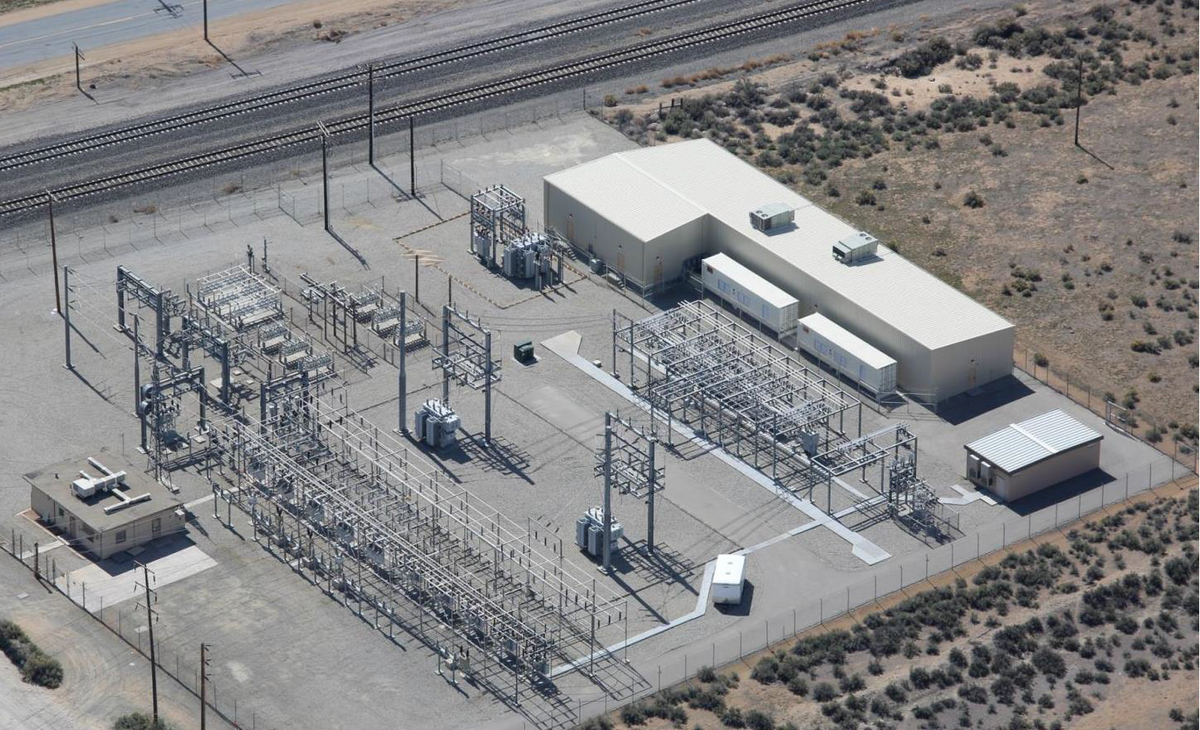
Unlike traditional fossil fuel power stations, battery storage plants require no fuel deliveries, are relatively compact, and lack large cooling systems or chimneys. This flexibility means they can be rapidly installed close to customer load, sometimes even within urban areas or sharing connections with active or disused power stations to reduce overhead.
While massive systems like pumped-storage power plants still hold the record for total energy storage (GWh), BESS is catching up quickly in terms of deployment and capacity. Furthermore, grid batteries offer greater redundancy, as a large number of smaller units can be widely distributed across a network.
The economic landscape for BESS has undergone a revolution. Battery power storage is now often cheaper than operating an open cycle gas turbine for use up to two hours. The Levelized Cost of Storage (LCOS) has plummeted, with costs halving approximately every 4.1 years between 2014 and 2024. By 2023, the price had fallen significantly, fueling explosive global deployment.
Technology and Safety Evolution
BESS technology shares similarities with uninterruptible power supplies (UPS) but on a massive, utility scale. Since electrochemical energy is stored as direct current (DC) and power networks run on alternating current (AC), all BESS facilities require sophisticated power electronics, namely inverters, to connect to the high voltage network.
For safety and security, the batteries themselves are housed in dedicated structures, such as warehouses or containers, and are electronically monitored. BESS lifespan is limited by cycle ageing, the deterioration caused by repeated charge-discharge cycles, which is exacerbated by high charging rates and deep discharge.
The Chemistry Shift
The core technology has evolved rapidly:
- Early Systems (1980s): Relied on lead-acid batteries.
- Mid-Period: Saw increased use of nickel–cadmium and sodium–sulfur batteries.
- Modern Era (Post-2010): Dominated by lithium-ion (Li-ion) batteries, driven by the massive scale and cost reduction from the electric vehicle industry.
More recently, the high availability, longer lifetime, and increased safety of Lithium Iron Phosphate (LFP) chemistry have made it a major contender for large-scale storage. Additionally, sodium-ion batteries are emerging, offering similar power delivery characteristics to Li-ion but with potentially lower costs and better safety profiles, though they are not yet fully commercialized.
Safety Measures
A critical consideration for BESS, especially those using certain Li-ion chemistries, is fire safety. While incidents have occurred, failure rates have decreased relative to the massive growth in deployment volume, thanks to increased research and mitigation measures. Modern systems are designed to be securely sealed and monitored to prevent critical failures like overheating or electrolyte leaks.
Global Deployment: A Market on the Rise
The battery storage market is experiencing unprecedented growth worldwide. By May 2025, China’s cumulative BESS installations surpassed 100 GW, demonstrating global leadership. The United States and Europe are also seeing rapid deployment, with billions of dollars invested in utility-scale projects annually. This growth curve mirrors that of photovoltaics (solar) over the last decade, indicating that BESS is now a mature and highly competitive energy solution.
Reference: Inspired by content from https://en.wikipedia.org/wiki/Battery_energy_storage_system.