
🤖 AI Expert Verdict
Wind power is a rapidly growing energy source in the United States, currently accounting for over 10% of electricity generation. As of late 2023, the U.S. installed capacity exceeded 147 GW, making it one of the largest global markets. Texas holds the highest total capacity, while Iowa generates over 57% of its electricity from wind. Wind energy's cost (LCOE) is highly competitive, and vast future potential exists both onshore and offshore, potentially supplying nine times the current total U.S. electricity consumption.
- Leading renewable energy source in the US, surpassing hydroelectric power.
- Highly competitive Levelized Cost of Energy (LCOE), often cheaper than conventional sources.
- Massive untapped onshore and offshore potential (estimated 9x current consumption).
- Reduces reliance on fossil fuels, occasionally surpassing coal generation.
Wind Power in the U.S.: A Decade of Rapid Growth and Renewable Leadership
Wind power has become a cornerstone of the renewable energy sector in the United States, rapidly expanding its footprint and transforming the nation’s energy mix. As of 2024, wind farms generated 451.9 terawatt-hours, accounting for a significant 10.49% of all electricity produced in the U.S. This impressive growth means that the average wind turbine can generate enough electricity in just 46 minutes to power a typical American home for an entire month.
Surpassing Hydro: Wind Takes the Lead
A major milestone was achieved in 2019 when wind power surpassed hydroelectric power to become the largest renewable energy source in the nation. The expansion continued rapidly, highlighted by record-breaking installation years, including 2020 (16,913 MW installed) and 2021 (13,365 MW installed). In a historic shift, wind generation even exceeded coal generation for extended periods in March and April 2024, signaling a major transition away from previously dominant fossil fuels.
U.S. Wind Capacity: Global Comparison
The United States boasts one of the largest wind power capacities globally, exceeded only by China and the European Union combined. As of December 2023, the total installed nameplate generating capacity reached 147,500 megawatts (MW), supported by favorable governmental policies, including production tax credits and state-level renewable portfolio standards designed to accelerate industry development.
The Wind Belt: State Leaders in Generation
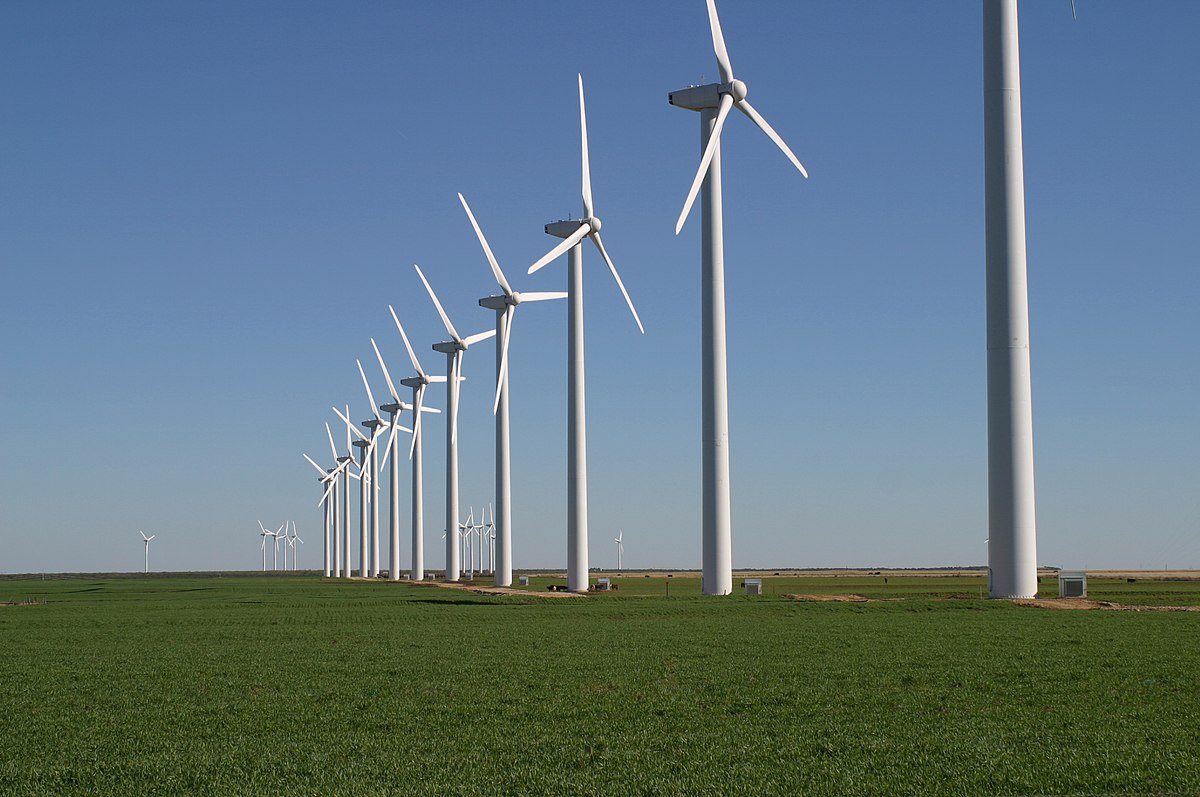
While wind energy is developing across the country, certain states have emerged as national leaders. By September 2019, 19 states had over 1,000 MW of installed capacity, with five states—Texas, Iowa, Oklahoma, Kansas, and California—responsible for generating over half of the national total.
- Texas: For more than a decade, Texas has maintained the highest installed capacity, reaching 39,450 MW. This generates approximately 25% of the state’s total electricity in 2024.
- Iowa: Iowa leads the nation in wind energy penetration, generating over 57% of its total energy production from wind power—a significant achievement.
- North Dakota: This state currently holds the highest per capita wind generation.
Major Wind Farms and Technological Pioneers
The U.S. is home to massive wind installations, demonstrating the scale of modern renewable infrastructure. The Alta Wind Energy Center in California (1,548 MW) is currently the largest completed wind farm. However, the future giant will be SunZia Wind in Central New Mexico. Set for completion in 2026, it is projected to be the largest wind farm in the Western Hemisphere with a 3,500 MW generating capacity.
The foundation for utility-scale wind power was laid decades ago, notably by the NASA wind turbine program (1974 to the mid-1980s), which pioneered key technologies like variable-speed generators and composite blades that are integral to today’s multi-megawatt turbines.
The Economics of Wind Power
Wind energy has become highly competitive financially. According to Lazard’s 2023 LCOE report, the unsubsidized Levelized Cost of Energy (LCOE) for onshore wind ranges between $24 and $75 per megawatt-hour (MWh). The lower end of this range is comparable to utility-scale solar PV and significantly cheaper than conventional fossil fuels. However, the industry faces cost variability. Furthermore, reliance on intermittent sources presents challenges, as evidenced in 2023 when production fell by 2% despite capacity increases, mainly due to weaker-than-normal winds in the Midwest, demonstrating the dependency on climatic conditions.
Vast Future Potential: Onshore and Offshore
The growth potential for U.S. wind power is enormous. The National Renewable Energy Laboratory (NREL) estimates that the contiguous United States has a massive 10,459 GW of onshore wind potential—an amount nine times larger than the nation’s total electricity consumption. Additionally, the U.S. holds 4,150 GW of potential offshore wind capacity. The Department of Energy’s “20% Wind Energy by 2030” report outlines a vision where wind power supplies a fifth of all U.S. electricity, requiring continued technological advancement and transmission grid improvements.
Reference: Inspired by content from https://en.wikipedia.org/wiki/Wind_power_in_the_United_States.