
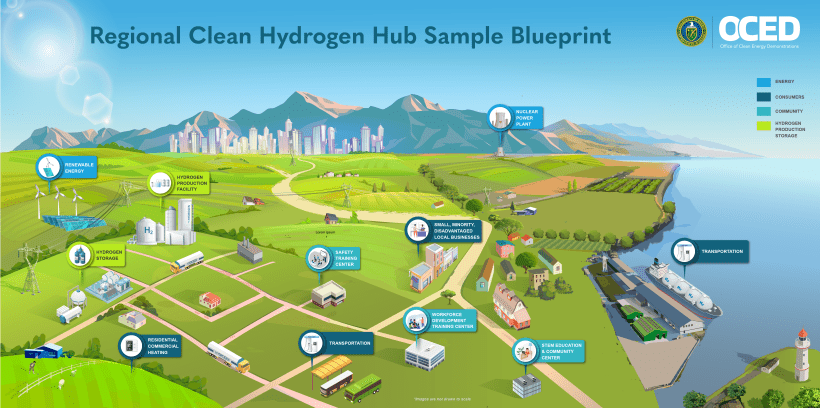
The U.S. Department of Energy (DOE) supports clean hydrogen. In late 2023, the DOE announced a $7 billion plan. This money funds seven Regional Clean Hydrogen Hubs. The goal is scaling cost-effective clean hydrogen use. Utilities face rising pressure from data centers. These industries demand large amounts of reliable power. Hydrogen helps utilities meet this high demand. It also supports net zero carbon goals. Hydrogen is essential for the energy transition. Many companies promise carbon neutrality. Hydrogen offers a flexible tool for balancing demand and sustainability. Globally, climate goals require massive infrastructure. The International Renewable Energy Agency (IRENA) projects this need. They forecast 5.5 TW of electrolyzer capacity by 2050.
The Electric Power Research Institute (EPRI) focuses on hydrogen applications. Their goal is decarbonizing the power sector. They also maintain reliability and affordability. EPRI partners with utilities and stakeholders. They explore using hydrogen as a fuel in natural gas plants. This work happens through the Low-Carbon Resources Initiative. “Blending hydrogen with natural gas reduces carbon emissions,” said Alex Gupta. Gupta is EPRI’s Low-Carbon Fuel Safety Specialist. Using existing assets with low hydrogen concentrations allows for some decarbonization. Higher blends are possible as infrastructure matures. We must ensure hydrogen use is safe and sustainable. It must not cause unintended safety or environmental risks. Developing standardized best practices is crucial as use expands. EPRI detailed recent research in a new report. It covers safety and environmental lessons from demonstration projects. You can find more insights by visiting our resources. Read Our Blog today.
EPRI analyzed three demonstration projects. They studied real-world cofiring of hydrogen and natural gas. These projects varied in technology, size, and hydrogen percentage. They represent many U.S. power-generating assets. EPRI’s analysis guides future blends. Experts worried that hydrogen might increase nitrogen oxide (NOx) emissions. Emissions monitoring did not support this concern. “We observed no adverse environmental impacts,” Gupta confirmed. NOx emissions were comparable to standard natural gas burning. Overall environmental impacts decreased due to lower direct carbon emissions. Hydrogen offers big benefits in carbon reduction. However, we must consider its production. Electrolysis production is energy-intensive. Balancing energy demands with renewable sources is vital. This ensures hydrogen truly aids decarbonization. We must scale green hydrogen production. This requires massive renewable energy capacity.
The projects addressed safety concerns, especially leaks. They detected no leaks or safety problems during operation. Established industry protocols proved effective. Hydrogen-specific codes like NFPA 2 ensured safety. The demonstrations showed that cofiring does not need new controls. “Operations were routine,” Gupta noted. They were similar to burning any other fuel. EPRI identified best practices to help future projects. These include robust safety protocols. They also require proper infrastructure planning and personnel training. These practices accelerate hydrogen’s role in decarbonization. “Our report guides those interested in hydrogen combustion,” Gupta concluded. It offers a starting point for safe and beneficial outcomes. If you want to equip your home or business for a cleaner energy future, Shop Our Products now.
Reference: Inspired by content from https://www.powermag.com/hydrogen-attracts-significant-investments-to-support-a-decarbonized-energy-economy/.