🤖 AI Expert Verdict
Hydroelectric power, generated from hydropower, is a major global electricity source, providing 15% of the world's power and ranking as the largest renewable technology. It functions by converting the potential energy of dammed water (the 'head') via a turbine/generator system. While offering low-carbon, on-demand electricity, large projects face environmental challenges such as habitat disruption and population displacement. Key types include large dam-based systems, run-of-the-river setups, and pumped-storage schemes, which are vital for grid energy storage.
- Low-carbon electricity supply, emitting less greenhouse gas than fossil fuels.
- Provides large amounts of power on demand (flexible source), stabilizing the grid.
- No direct operational waste once constructed.
- Dominant renewable technology globally, with 1,400 GW installed capacity.
- Pumped-storage systems offer crucial grid energy storage (85% of global capacity).
The Power of Water: Understanding Hydroelectric Energy
Hydroelectricity, often simply called hydropower, is the process of generating electricity using the kinetic and potential energy of moving water. This ancient method of utilizing water power has transformed into the single largest source of renewable energy globally, providing approximately 15% of the world’s total electricity supply—nearly 4,210 TWh in 2023. This output surpasses all other renewable sources combined and even exceeds nuclear power generation, solidifying hydroelectricity’s role as a cornerstone of secure and clean global energy systems.
How Hydroelectric Power Works
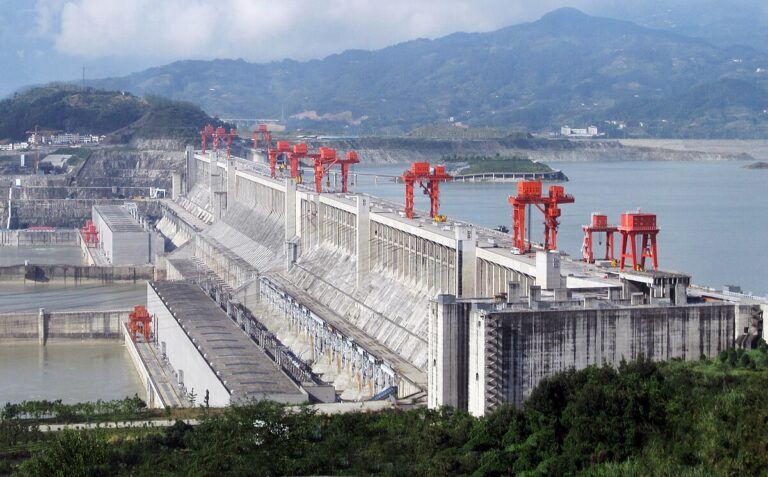
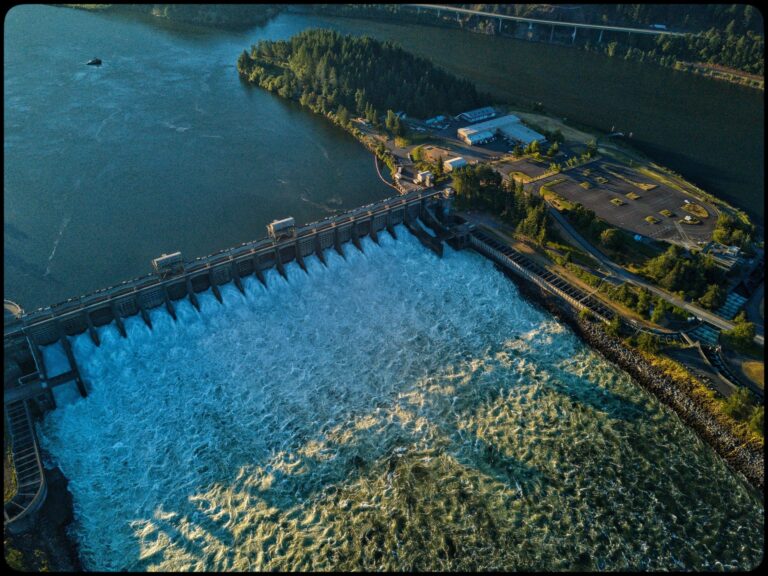
Most hydroelectric power is derived from the potential energy stored in dammed water. The essential mechanism involves three key components: a dam and reservoir, a penstock, and a turbine/generator unit. The ‘head’ refers to the difference in height between the water source (reservoir level) and the water’s outflow. The greater the head and the volume of water, the more power can be extracted.
Water is delivered from the reservoir through a large pipe called the “penstock.” This water then strikes the blades of a turbine, causing it to spin. The turbine is coupled to an electrical generator, which converts the mechanical energy into usable electricity. Once the complex is built, it produces minimal direct waste and typically emits considerably less greenhouse gas than fossil fuel plants.
Flexibility and Grid Stability
One of hydropower’s most significant advantages is its flexibility. A hydroelectric power station featuring a dam and reservoir acts as an on-demand, flexible source, meaning the amount of electricity produced can be increased or decreased rapidly—often in seconds or minutes—to match fluctuating electricity demand. This quick response capability is crucial for maintaining grid stability.
Types of Hydroelectric Schemes
While large-scale dam projects are the most recognized form, hydropower is classified based on capacity and operational style:
1. Pumped-Storage Schemes
Pumped storage is not technically an energy source but rather a mechanism for grid storage. At times of low electrical demand, excess generation capacity (from solar, wind, or nuclear) is used to pump water into an upper reservoir. When demand spikes, the water is released back down through a turbine to the lower reservoir, quickly generating electricity. In 2021, pumped-storage systems accounted for almost 85% of the world’s grid energy storage capacity.
2. Run-of-the-River Systems
These stations possess small or no reservoir capacity. They utilize only the water flow available from upstream at that moment. While they have a lower environmental impact, their generation capacity is entirely dependent on the natural flow rate of the river.
3. Classification by Scale
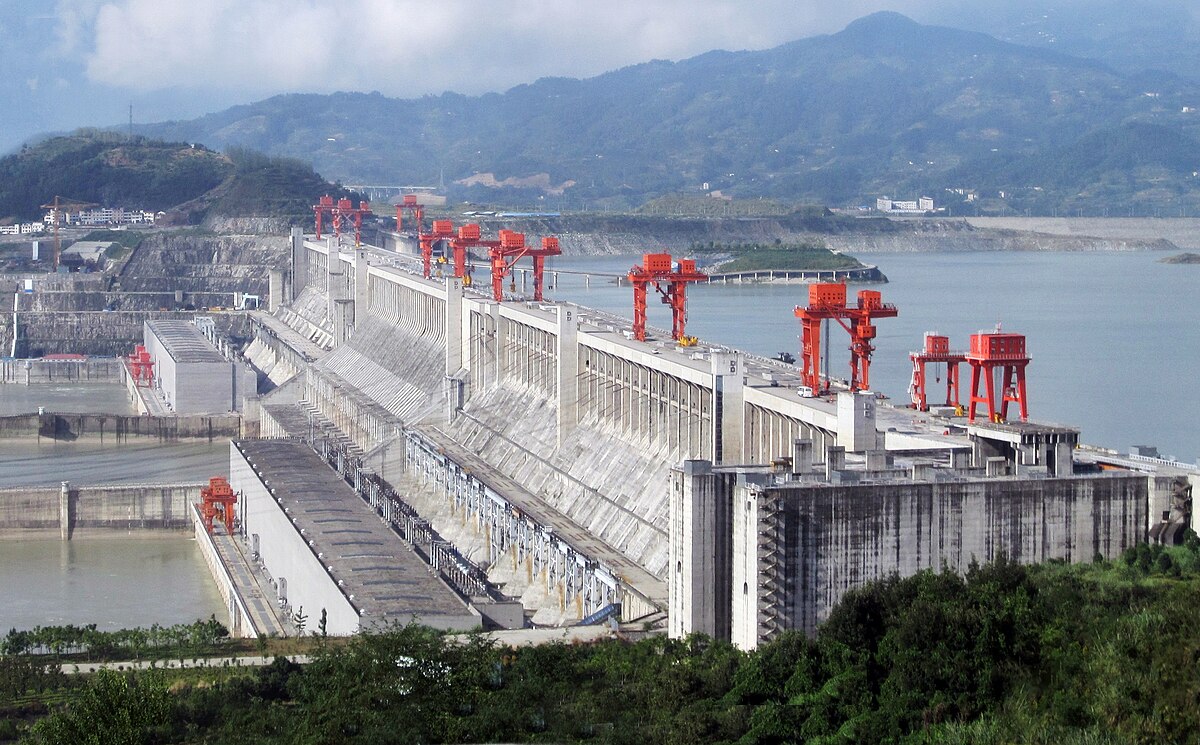
- Large Hydro Power (LHP): Generally defined as facilities over 50 MW. These are the largest producers in the world, exemplified by structures like the Three Gorges Dam in China (22.5 GW).
- Small Hydro Power (SHP): The capacity definition varies widely by country (often under 10 MW to 30 MW). These facilities typically rely on natural water discharge with less regulation than LHP.
- Micro Hydro: Installations producing up to 100 kW. These are vital for powering isolated homes or small, remote communities, particularly in developing nations.
- Pico Hydro: Generation under 5 kW, capable of powering basic needs like a few lights and phone chargers in very small communities.
Environmental and Social Challenges
Despite being a low-carbon source, large hydroelectric complexes face notable environmental and social challenges. Construction can lead to the significant loss of arable land and necessitates population displacement. Furthermore, dams disrupt the natural ecology of the river, altering habitats, affecting ecosystems, and changing natural siltation and erosion patterns.
In specific environments, such as lowland rainforest areas where part of the forest is inundated, initial construction and flooding can lead to substantial greenhouse gas emissions from decaying vegetation. Additionally, while dams mitigate the risks of routine flooding, a catastrophic dam failure remains a devastating, albeit rare, possibility.
Historical Footprint and Modern Status
Hydropower dates back to ancient times, used for mechanical tasks like grinding flour. Its transition to electricity generation began in the late 19th century. The world’s first hydroelectric scheme was developed in Cragside, England, in 1878. Shortly thereafter, the Vulcan Street Plant in Appleton, Wisconsin, began operating in 1882, marking the beginning of widespread adoption. By 1920, 40% of US power was hydroelectric.
Today, global installed capacity is nearing 1,400 GW. Countries like China, which added 24 GW in 2022, Brazil, and Norway lead the world in utilizing this energy source. However, the International Energy Agency (IEA) notes that growth potential is geographically limited in highly developed regions, and major modernization and refurbishment efforts are required globally to maintain efficiency and reliability.
Reference: Inspired by content from https://en.wikipedia.org/wiki/Hydroelectricity.