
🤖 AI Expert Verdict
Climate change mitigation requires immediate and drastic global action to limit warming to 1.5°C. Key strategies include rapidly transitioning the energy sector toward cost-effective solar and wind power, implementing demand-side solutions (like dietary shifts and improved efficiency) capable of reducing emissions by up to 70%, and enacting strong policies such as carbon pricing. Emissions must peak before 2025 and decline by 43% by 2030 to meet international climate goals, necessitating broad economic transformations across energy, land use, and transport.
- Renewable energy (solar/wind) is the most cost-effective path to energy decarbonization.
- Demand-side shifts (diet, transport) can reduce emissions significantly while improving human well-being.
- Climate mitigation presents opportunities for industrial development and technological exports.
The Urgent Path to Decarbonization: How to Drastically Reduce Greenhouse Gas Emissions
Climate change mitigation, or decarbonization, involves taking crucial action to limit the greenhouse gases (GHGs) accumulating in the atmosphere. These efforts are essential to avert catastrophic climate change impacts. Historically, mitigation has focused on energy conservation and replacing fossil fuels with clean sources. However, recent assessments stress that the timeline for action is alarmingly short.
To limit global warming to the aspirational 1.5 °C goal set by the 2015 Paris Agreement, global GHG emissions must peak before 2025 and subsequently decline by approximately 43% by 2030. This demands rapid, systemic transitions across energy, transport, and land-use systems.
The Global Emissions Gap and Policy Failure
Despite the scientific consensus, current climate change mitigation policies are severely inadequate. Projections indicate that existing commitments would still result in global warming of about 2.7 °C by the end of the century, significantly exceeding the Paris Agreement targets. The world must focus on broad-based, economy-wide transformations rather than relying on incremental change.
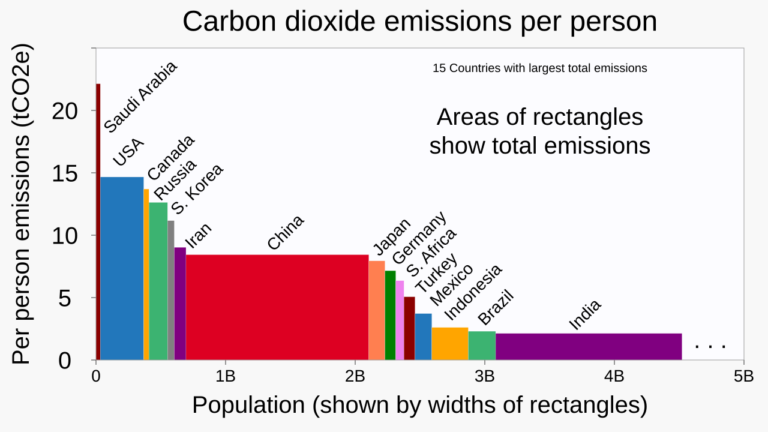
The vast majority of human-caused emissions—averaging a record 56 billion tons (Gt) a year in the 2010s—come from burning fossil fuels (coal, oil, and natural gas). In 2016, energy for electricity, heat, and transport alone was responsible for 73.2% of GHG emissions, making the energy system the primary target for change.
Transforming the Energy Sector: The Renewable Imperative
Rapid and deep reductions in carbon dioxide and other greenhouse gas emissions from the energy sector are non-negotiable. This involves drastically reducing fossil fuel consumption, ramping up production from low- and zero-carbon sources, and increasing the use of electricity across all sectors.
A 2023 study highlighted that rapidly expanding global solar and wind capacity could reduce energy-sector CO2 emissions by up to 6.6 gigatonnes per year by 2035. Solar and wind power are often the most cost-effective renewable options for replacing fossil fuels.
While the variable nature of solar and wind requires complex solutions, these challenges are manageable through comprehensive electrical grid upgrades. Solutions include using long-distance electricity transmission to aggregate diverse power sources, employing energy storage technologies to balance output, and implementing demand management strategies to limit power use during generation dips. Cleanly generated electricity can then replace fossil fuels for powering transportation, heating buildings, and running many industrial processes.
Demand-Side Solutions: Changing Consumption Habits
Mitigation is not just about power generation; it’s also about consumption. Recent research suggests that demand-side climate solutions—focused on shifts in behavior and efficiency—could reduce global GHG emissions by 40% to 70% by 2050 while simultaneously improving human well-being. These crucial shifts include:
- Changes in transportation behavior (e.g., increased public transit, cycling, electric vehicles).
- Dietary changes, such as adopting a more plant-based or low-carbon diet.
- Improved building energy efficiency.
- Reduced material consumption and waste.
Tackling Hard-to-Abate Emissions and Carbon Removal
Certain processes, such as air travel and cement production, are challenging to decarbonize fully. In these circumstances, Carbon Capture and Storage (CCS) can be an option to reduce net emissions, though CCS attached to fossil fuel power plants remains a high-cost strategy.
Furthermore, Carbon Dioxide Removal (CDR) technologies are increasingly vital. CDR encompasses anthropogenic activities that remove CO2 directly from the atmosphere and store it durably, either in geological, terrestrial, or oceanic reservoirs. This includes both enhancing biological sinks and advanced technologies like Direct Air Carbon Dioxide Capture and Storage (DACCS).
Sustainable Land Use and Agriculture
Human land use changes, including agriculture and deforestation, contribute about one-quarter of climate change. These activities impact the amount of CO2 absorbed by plant matter and released by decaying organic matter. Agriculture is also the largest source of anthropogenic methane emissions, primarily from livestock and organic decay.
To cut land-use emissions, significant changes are needed:
- Reducing food waste globally.
- Switching to more plant-based diets to reduce livestock methane.
- Improving farming processes to optimize soil health and fertilizer use (which limits nitrous oxide emissions).
Policy and Global Cooperation: Accelerating the Transition
Effective policies are necessary to accelerate climate mitigation efforts. These include:
- Carbon Pricing: Implementing systems that either tax CO2 emissions or cap total emissions and allow trading of credits.
- Subsidy Reform: Eliminating fossil fuel subsidies and shifting financial support toward clean energy initiatives and energy efficiency measures.
- International Pledges: Initiatives like the Global Methane Pledge (launched by the US and EU) aim to drastically cut short-lived climate pollutants.
While climate action is often framed as an economic burden, it is also a massive opportunity for industrial development, technological exports, and improved national status. Setting ambitious examples can influence other countries to follow suit, ensuring that the necessary drastic cuts in greenhouse gas emissions are achieved to sustain ecosystems and human civilization.
There is no single pathway to limiting global warming to 1.5 °C. Success requires pursuing all mitigation measures simultaneously and with unprecedented speed.
Reference: Inspired by content from https://en.wikipedia.org/wiki/Climate_change_mitigation.