🤖 AI Expert Verdict
Hydroelectric power generates electricity using turbines driven by water flow, converting the potential energy of falling water into mechanical energy. It is the most widely used form of renewable energy globally, known for being continually renewable and non-polluting, though associated dams can cause significant environmental impact, including blocking fish migration and vulnerability to drought.
- It is a continually renewable energy source.
- It does not produce thermal pollution.
- Pumped storage systems efficiently meet peak electrical demands.
Hydroelectric Power: Harnessing the Energy of Water
Hydroelectric power creates electricity. Turbines drive generators to achieve this. Falling or fast-flowing water creates mechanical energy. This energy source is crucial globally. It is the most popular form of renewable energy. It made up over 18% of global power capacity in 2019.
How Hydro Power Plants Work
Hydro plants collect or store water at a high elevation. Large pipes or tunnels carry the water downward. We call these pipes penstocks. The difference in elevation is the working “head.” At the end of its passage, the falling water causes turbines to spin. Turbines then drive powerful generators. Generators convert mechanical energy into electricity. Next, transformers increase the alternating voltage. This process prepares the power for long-distance transmission. The powerhouse structure holds the turbines and generators inside it.
Location and Dam Design
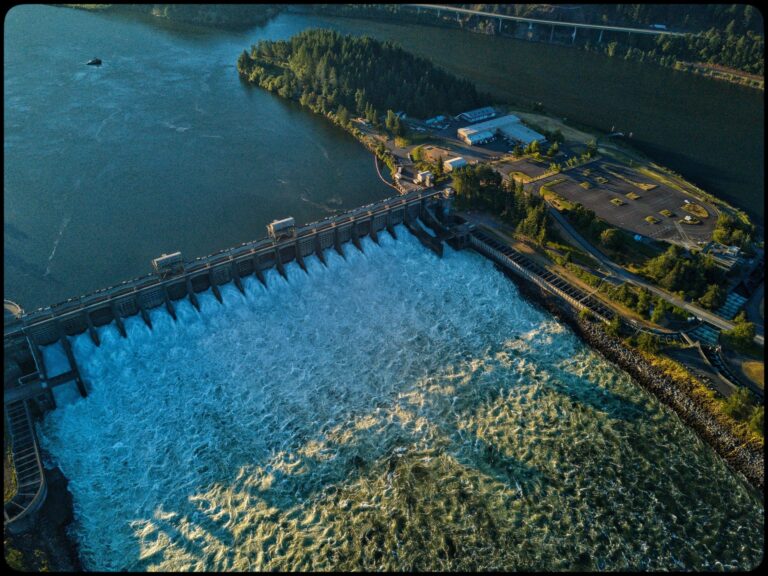
We usually build these power plants within river dams. Dams raise the water level behind them significantly. This action creates the highest possible head. Potential power output depends on the working head. High-head installations need less water volume. They produce the same power as low-head sites. Some dams use a spillway. This allows them to discharge excess water during floods. In narrow, steep gorges, the powerhouse might sit right inside the dam.
Managing Electrical Load and Storage
Demand for electric power changes constantly throughout the day. Pumped-storage stations help balance the overall electrical load.
They use extra power during off-peak periods. A generator operates as a motor at this time. It drives the turbine to pump water into an elevated reservoir. Workers release the water during times of peak demand. The flowing water goes back down through the turbine. It generates electrical energy once more. Pumped storage systems are very efficient. They offer an economical way to meet peak demands effectively. In certain coastal areas, plants harness the tides. For instance, the Rance River estuary in France uses tidal power. The incoming high tide traps water in reservoirs. The water releases during low tide. This flow drives hydraulic turbines and generators.
Advantages and Drawbacks
Hydroelectric power offers clear advantages over fossil fuels. It is continually renewable energy. The recurring hydrologic cycle ensures this continuous supply. It also causes no thermal pollution in the process. However, some dams can produce methane gas. This happens when underwater vegetation starts decomposing. Hydro power suits areas with heavy rainfall. It works best in mountainous regions. The location must be near main load centers. Remote hydro sites might require long, high-voltage lines. Small local sites can also be economical. They store water during light loads and produce electricity during peaks.
Dams unfortunately create many negative environmental impacts. They interrupt the migrations of spawning fish. Salmon rely on these routes to breed. Reservoirs permanently flood existing land. This displaces both human and ecological communities. Droughts also pose a major threat to operations. Historic drought conditions forced California’s Oroville Dam to shut down in 2021.
Take Action
We must protect our vital water resources. Learn how you can help fight climate change today. Read Our Blog for more information. Are you ready to upgrade your home? Find efficient solutions now. Shop Our Products.
Reference: Inspired by content from https://www.britannica.com/science/hydroelectric-power.