🤖 AI Expert Verdict
Pumped-Storage Hydroelectricity (PSH) is a large-scale energy storage method. PSH systems pump water uphill using excess electricity, storing energy as gravitational potential energy. When demand rises, the water flows downhill through turbines to generate power, offering high efficiency (70-80%) and crucial grid stability, especially for integrating intermittent renewable sources like wind and solar.
- It is the largest capacity form of grid storage available globally.
- The system offers high round-trip efficiency (70% to 80%).
- PSH stabilizes electrical network frequency quickly.
- It allows baseload plants to operate at peak efficiency.
- It has a long service life, often lasting many decades.
Pumped-Storage Hydroelectricity: The Ultimate Grid Battery
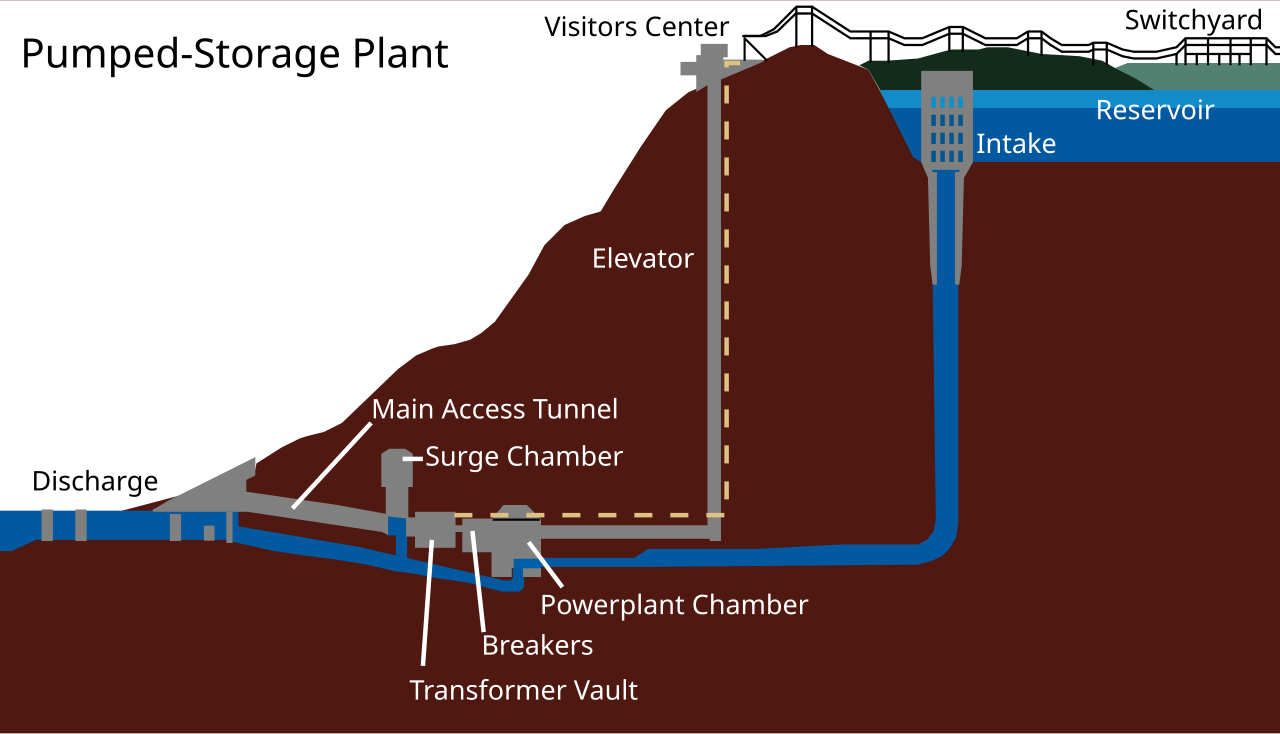
Pumped-storage hydroelectricity (PSH) is a key type of energy storage. It helps electric systems balance their load. PSH systems store energy using gravity. They pump water from a low reservoir to a high reservoir. Low-cost power, often available off-peak, runs these pumps. When electricity demand peaks, the system releases the stored water. This water flows through turbines and creates electric power.
How Pumped Storage Hydro Works
PSH saves energy from intermittent sources like solar or wind power. It also uses excess power from continuous sources like nuclear plants. This stored energy becomes available during high demand periods. PSH reservoirs can be small compared to traditional hydro plants. Generation periods usually last less than half a day. The system achieves a high round-trip efficiency. Efficiency typically ranges between 70% and 80%. Pumping does make the plant a net energy consumer overall. However, PSH significantly increases revenue. Operators sell electricity when prices are highest during peak demand.
Scale and Technology
PSH is the largest grid energy storage method available today. As of 2020, it made up about 95% of all active storage globally. The total installed capacity exceeds 181 GW. By 2025, PSH provides 200 GW of power globally. This technology uses two water reservoirs at different heights. A connection links the two reservoirs. During low electrical demand, excess power pumps water to the upper reservoir. The system releases the water to the lower reservoir when demand is high. Reversible turbine/generator assemblies handle both pumping and generating.
System Benefits and Stability
PSH smooths out load variations on the grid. This allows base-load stations like coal or nuclear plants to run at peak efficiency. It reduces the need for less efficient “peaking” power plants. PSH systems are vital for coordinating diverse generators. They also stabilize electrical network frequency. PSH plants respond to load changes within seconds. Thermal plants cannot react this quickly. PSH offers the most cost-effective way to store large amounts of electrical energy.
The Future of PSH and Renewables
PSH has traditionally balanced baseload powerplants. Now, it helps stabilize fluctuating renewable outputs. PSH creates a load when wind or solar generation is high. This increases system capacity during peaks. PSH will become crucial for large-scale solar and wind deployment. Scientists investigate seawater PSH options. Engineers also explore using underground reservoirs. They plan to use abandoned mines for lower reservoirs. This increases potential sites. PSH offers a long service life, often many decades. This service life is much longer than utility-scale batteries.
Look into green energy solutions today. Read Our Blog for more insights. You can also explore options to reduce your carbon footprint. Shop Our Products to start making a difference.
Reference: Inspired by content from https://en.wikipedia.org/wiki/Pumped-storage_hydroelectricity.