Pumped-Storage Hydroelectricity: Energy Storage Powerhouse
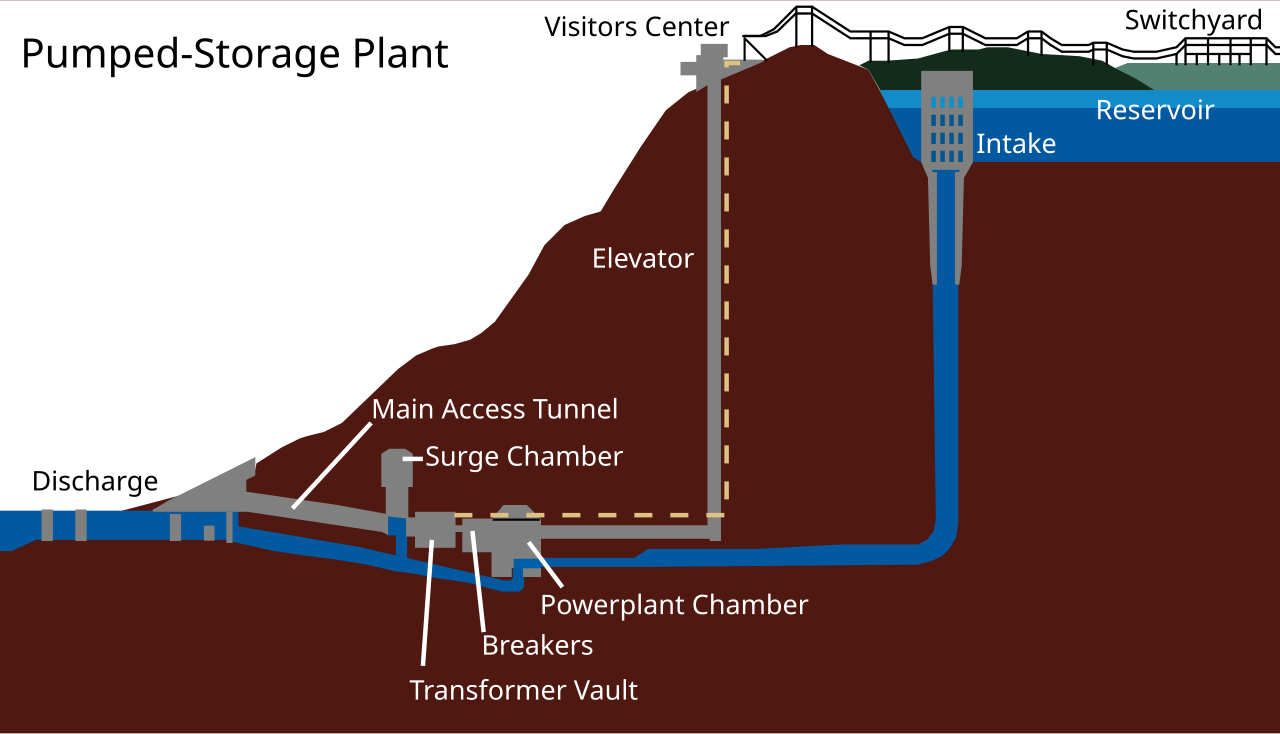
Pumped-storage hydroelectricity (PSH) is a key type of energy storage. It helps electric systems balance their load. PSH stores energy using water’s gravitational potential. Operators pump water from a lower reservoir to a higher one. They use cheap, off-peak electricity for this pumping. When demand is high, they release the stored water. This water flows through turbines and generates needed power.
PSH saves energy from intermittent sources. These sources include solar and wind power. It also uses excess power from continuous sources like nuclear or coal. This stored energy becomes available during peak demand. PSH systems typically achieve a 70% to 80% round-trip efficiency. While pumping consumes energy, the system makes money. It sells power during peak times when prices are highest.
How PSH Systems Work
A PSH system usually features two water reservoirs. These reservoirs sit at different elevations. When electricity demand is low, excess power pumps water uphill. When demand rises, water flows back down. This flow drives a turbine to generate power. Most PSH plants use reversible turbine assemblies. These assemblies work as both pumps and generators. Variable speed operation improves efficiency further.
The reservoirs do not need to be massive. They are often smaller than those used by conventional hydropower plants. Generating periods usually last less than half a day. PSH is the largest form of grid energy storage globally. As of 2020, it accounted for about 95% of all active storage installations.
Economic and Grid Benefits
PSH plants are crucial for grid stability. They stabilize electrical network frequency. They also provide reserve generation capacity. Thermal plants struggle to respond quickly to sudden demand changes. PSH plants respond within seconds, just like other hydro facilities.
PSH flattens load variations on the grid. This allows base-load stations (like coal or nuclear) to run efficiently. This reduces the need for less efficient “peaking” power plants. Capital costs for PSH are high. However, their proven service life is very long, often decades. This is much longer than utility-scale batteries. Sometimes, electricity prices become negative. PSH operators then earn money by “buying” power to pump water. They earn again when they sell the high-priced power later. This makes PSH very valuable.
We offer great ways to conserve energy at home. You should Shop Our Products today.
Alternative PSH Designs
The main need for PSH is hilly geography. The global potential for PSH sites is huge. Many proposed sites are “closed-loop” systems away from major rivers. Closed-loop systems use two artificial reservoirs with no natural inflows.
Engineers also explore other solutions. Some projects use existing reservoirs, called “bluefield.” Others use abandoned mines as lower reservoirs (“brownfield”). PSH can even operate using seawater. The Rance tidal power station in France uses seawater and acts partially as a PSH station. Using seawater presents challenges like corrosion. In Chile, a proposed project would lift seawater 600 meters up a coastal cliff.
For more insights into renewable energy, please Read Our Blog.
Conclusion
PSH remains the most cost-effective method for storing large amounts of electricity. It supports the growth of wind and solar power. Appropriate geography and high capital costs remain key factors. However, the system’s ability to stabilize the grid and offer long-term storage makes it vital for the future of energy.
Reference: Inspired by content from https://en.wikipedia.org/wiki/Pumped-storage_hydroelectricity.